Introduction
Every baker has experienced that moment of panic: you’re halfway through mixing a batch of muffins or a beautiful cake batter when you suddenly realize you’re out of baking powder. It’s a tiny ingredient with a massive job, and without it, most baked goods simply won’t rise properly. But here’s the good news—running out of baking powder doesn’t have to mean stopping your baking plans. With just a couple of everyday pantry staples, you can whip up your own homemade baking powder in minutes.
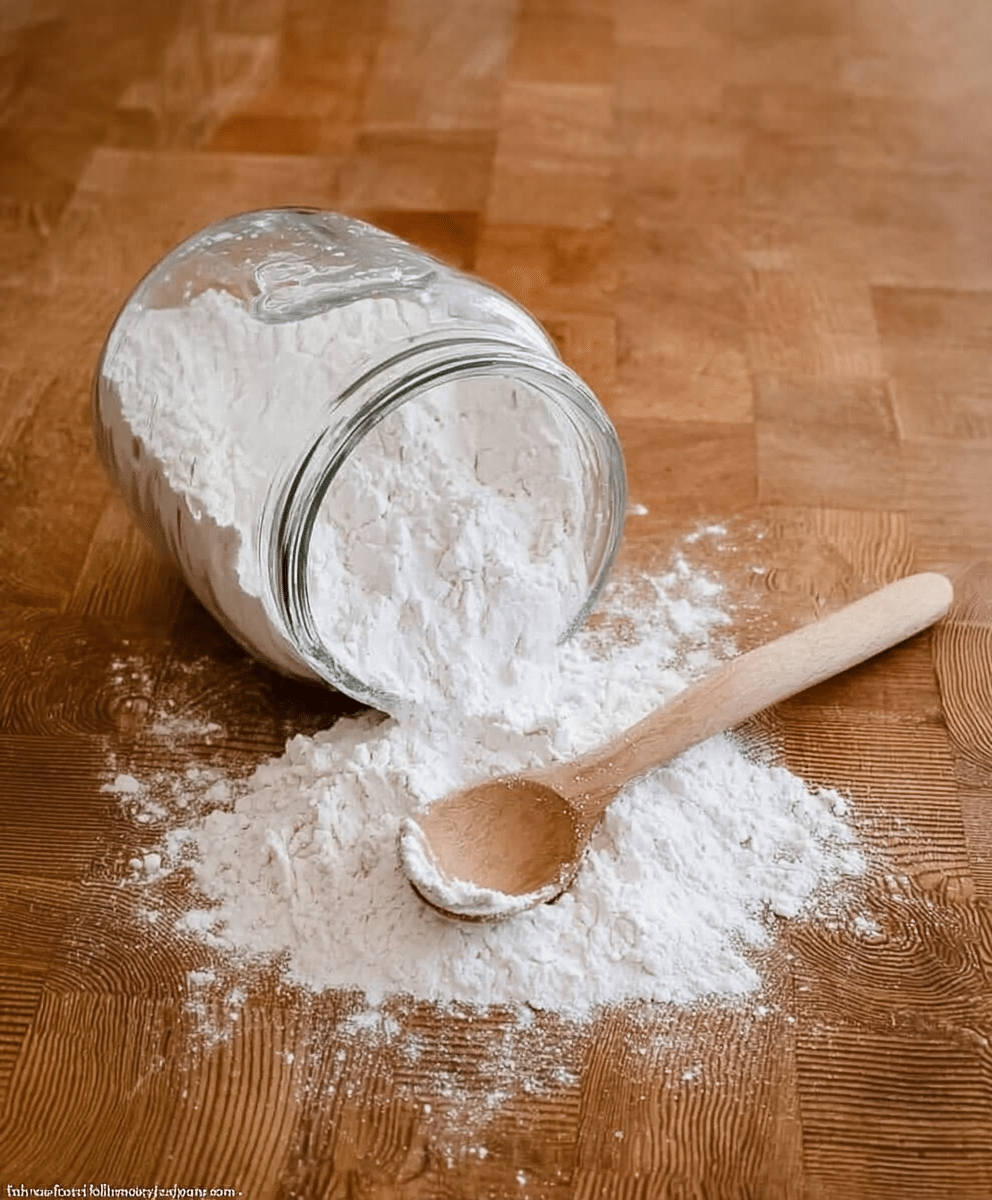
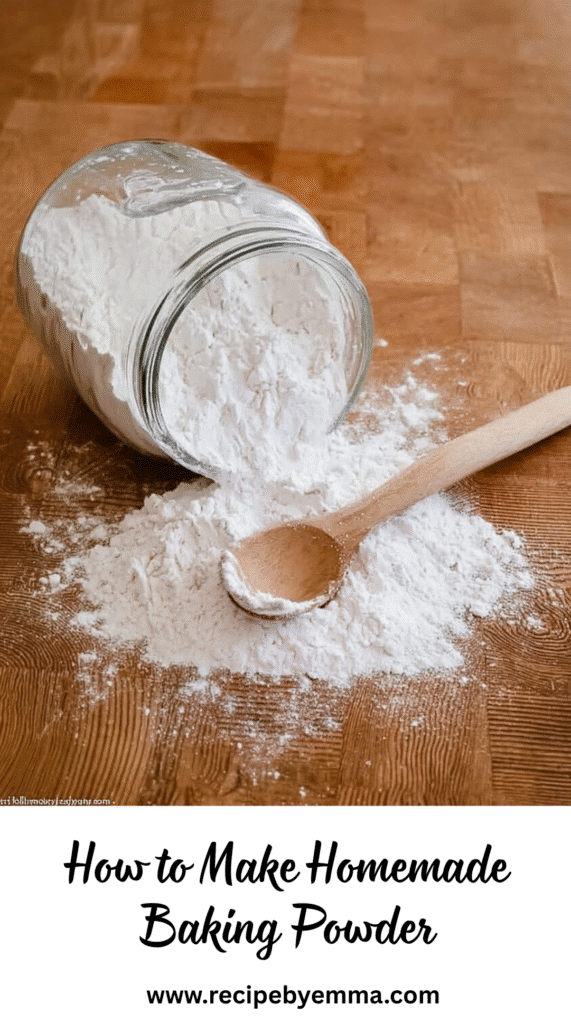
This Homemade Baking Powder Recipe is incredibly straightforward, wonderfully reliable, and a true pantry lifesaver. Whether you’re baking frequently or you’re someone who likes to be prepared with homemade staples, this recipe ensures you’ll never have to abandon a baking project again. With only baking soda, cream of tartar, and an optional starch for long-term storage, you get a perfectly functional leavening agent that mirrors the performance of store-bought versions.
This recipe is especially valuable for anyone who prefers to avoid additives found in some commercial baking powders, or for gluten-free, grain-free, or paleo bakers looking for a clean, customizable alternative. You can make just enough for a single recipe or prepare a larger batch to keep on hand for future bakes.
If you’ve ever wondered whether homemade baking powder actually works—the answer is yes. It works beautifully. And once you know how easy it is, you may never rely solely on store-bought again.
Why You’ll Love This Recipe
- Uses only two or three simple pantry ingredients.
- Takes less than five minutes to prepare from start to finish.
- Perfect emergency replacement when you run out unexpectedly.
- Allows for cleaner, additive-free baking.
- Customizable for gluten-free, grain-free, or paleo diets.
- Works exactly like conventional baking powder in baked goods.
Ingredients Breakdown
Below are the exact ingredients you provided, with no changes.
Yield: 1 tablespoon
Prep Time: 5 minutes
Total Time: 5 minutes
Ingredients
- 1 tsp baking soda
- 2 tsp cream of tartar
- 1 tsp cornstarch (optional for storage)
Large Batch (Makes about 1 Cup)
- ¼ cup baking soda
- ½ cup cream of tartar
- ¼ cup cornstarch (optional but recommended for storage)
Ingredient Notes
Baking soda:
Commonly sold in bulk or boxed form, baking soda acts as the base that reacts with cream of tartar to create lift in baked goods. You’ll find it in the baking aisle of most grocery stores.
Cream of tartar:
This acidic powder is essential for activating the baking soda. Typically found in the spice section, cream of tartar is what turns baking soda into a usable leavening blend.
Cornstarch or arrowroot:
This ingredient helps keep the mixture dry and clump-free, making it ideal for storage. It is optional for small, immediate-use batches. Both cornstarch and arrowroot are located in the baking or gluten-free aisle.
Additions
- Arrowroot powder: A great alternative to cornstarch if you prefer a grain-free or paleo-friendly version.
- Dried lemon zest: A pinch can add a gentle citrus note, especially lovely in light cakes or muffins.
Substitutions
- Arrowroot for cornstarch: Swap at a 1:1 ratio if avoiding corn.
- Skip the starch entirely: If making a very small batch for immediate use, you can omit the starch.
Serving Size
The base recipe yields 1 tablespoon of homemade baking powder, which is enough for many standard baking recipes. Larger batches store beautifully when kept dry and airtight.
Tools & Equipment Needed
To make this recipe successfully, you’ll only need a few basic kitchen tools:
- Measuring spoons or measuring cups (for the large batch)
- A small mixing bowl
- A whisk or small spoon for mixing
- A fine-mesh sieve (optional but helpful for preventing clumps)
- Airtight glass jar or container for storage
- Label and marker for noting the preparation date
No special equipment or appliances are required, making this one of the most accessible DIY staples you can prepare at home.
Step-by-Step Instructions
Below are the exact instructions you provided, expanded with context for clarity but without changing the steps themselves.
- Combine the ingredients.
Add the baking soda and cream of tartar to a small bowl. If you’re using cornstarch (or arrowroot), add it as well. - Whisk thoroughly.
Whisk all ingredients together until fully combined. This ensures the leavening power is evenly distributed and prevents uneven rising in baked goods. - Store the mixture.
Transfer the mixture to a glass jar or an airtight container with a tight-fitting lid. Make sure the container is completely dry. - Label your container.
Label and date the jar so you know when it was made and can track freshness.
These steps apply to both small and large batches. Once mixed, your baking powder is ready to use immediately.
Tips & Variations
Dietary Adjustments
- Gluten-free: Use arrowroot or cornstarch—both are naturally gluten-free.
- Grain-free or paleo: Swap cornstarch for arrowroot.
- Corn-free: Arrowroot is an ideal substitute for cornstarch.
Adjusting for Freshness
If your homemade baking powder has been stored for a few weeks, test it before using (see the Freshness Test Tip below).
Seasonal Substitutions
- For spring and summer baking, add a hint of dried lemon zest.
- For autumn bakes, a tiny pinch of cinnamon can add warmth.
Pantry Substitutions
- Arrowroot can replace cornstarch at a 1:1 ratio.
- Omit cornstarch entirely if you are making the baking powder for immediate use.
Freshness Test Tip
To ensure your homemade baking powder is active:
- Add ½ teaspoon of baking powder to ¼ cup warm water.
- If it bubbles and fizzes immediately, it’s still good.
- If not, it’s time to mix a fresh batch.
This test is especially useful for large batches stored for longer than a few weeks.
Flavor Profile & Pairings
While baking powder isn’t something you taste directly, its contribution to baked goods is essential. It brings:
- Lift and lightness to cakes, muffins, biscuits, and quick breads.
- A tender crumb in pancakes and waffles.
- Softer texture in cookies and scones.
Pairing ideas are omitted per your request (no drink pairings).
Nutritional Overview
Because baking powder is used in small amounts and consists primarily of basic pantry ingredients, it’s very low in calories. A tablespoon will have minimal macronutrient impact.
General estimates per teaspoon (may vary slightly):
- Calories: Very low
- Fat: 0 g
- Carbohydrates: Minimal
- Protein: 0 g
- Sodium: Moderate, depending on usage
- Allergen considerations: Naturally nut-free and dairy-free
Make-Ahead & Meal Prep Tips
This recipe is ideal for prepping in advance. Here’s how to get the most out of it:
- Make the large batch to keep in your pantry for up to several weeks.
- Use cornstarch or arrowroot to help maintain dryness.
- Store the baking powder in a cool, dark cabinet away from moisture.
- Use airtight glass containers to maximize freshness.
Homemade baking powder generally lasts 1–2 months when stored properly.
FAQs
1. Does homemade baking powder work as well as store-bought?
Yes. When mixed correctly, homemade baking powder performs identically in most recipes.
2. Do I need the cornstarch?
Cornstarch is optional for small batches but recommended for large batches because it prevents clumping and extends shelf life.
3. Can I double or triple this recipe?
Absolutely. Homemade baking powder is easily scalable.
4. Can I store it for months?
Homemade versions don’t last as long as commercial ones but generally stay fresh for 4–8 weeks if stored properly.
5. Can I use arrowroot instead of cornstarch?
Yes. Arrowroot is an effective 1:1 substitute.
6. What happens if baking powder loses its potency?
Your baked goods may not rise. Use the fizz test before baking.
Cooking Timeline (At a Glance)
| Step | Time |
|---|---|
| Prep ingredients | 2 minutes |
| Whisk ingredients | 1 minute |
| Transfer to container | 1 minute |
| Label and store | 1 minute |
| Total Time | 5 minutes |
Serving Suggestions
Because this is an ingredient rather than a finished dish, your homemade baking powder can be used anywhere standard baking powder appears in recipes—cakes, muffins, pancakes, biscuits, scones, waffles, quick breads, cookies, and more.
It’s especially helpful in:
- Small-batch baking
- Emergency recipe rescues
- Additive-free baking
- Gluten-free or grain-free recipes
Recipe Variations
1. Citrus Baking Powder
Add dried lemon zest for a subtle bright flavor. Great in cakes and muffins.
2. Grain-Free Baking Powder
Use arrowroot instead of cornstarch for paleo and grain-free baking.
3. Single-Use Emergency Batch
Skip the starch and mix only what you need right before baking.
4. Bulk Pantry Batch
Follow the large batch measurements and store for frequent baking.
Ingredient Spotlight
Cream of Tartar
Cream of tartar is a byproduct of wine fermentation and a powerful acid used to stabilize and activate baking soda. When paired with baking soda, it creates the leavening reaction necessary for baked goods to rise.
How to choose:
Select a fresh, unopened bottle from the spice section.
How to store:
Keep in a dry cupboard away from moisture.
How to use:
Always whisk thoroughly to ensure even distribution.
Baking Soda
A common household staple, baking soda is essential for creating lift in baked goods when paired with an acid.
How to select:
Any brand works well; freshness is key.
How to test:
Add a little vinegar—if it fizzes, it’s active.
Pro Cooking Tips
- Always whisk thoroughly to prevent pockets of baking soda.
- Use a dry spoon each time you scoop from the jar.
- Never store homemade baking powder above the stove or near heat.
- For best results, make only a month’s worth at a time.
- Sift the mixture if you notice clumps.
- Keep away from humidity—moisture will deactivate it.
Storage & Freezing Guide
Storing Homemade Baking Powder
- Keep in an airtight glass jar.
- Store in a cool, dark cabinet.
- Avoid moisture at all costs.
- Add cornstarch or arrowroot when storing long term.
Freezing
Do not freeze baking powder. Moisture from the freezer environment can deactivate it.
Shelf Life
Expect 4–8 weeks of optimal freshness when stored properly.
Nutrition Estimate Table (Per Serving)
Since baking powder is used in small amounts, exact nutritional values are minimal, but here is a helpful overview:
| Nutrient | Approximate Amount |
|---|---|
| Calories | Very low |
| Carbs | Minimal |
| Fat | 0 g |
| Protein | 0 g |
| Sodium | Moderate (from the baking soda) |
| Dietary Notes | Gluten-free, nut-free, dairy-free |
Expanded Conclusion
Homemade baking powder is one of those simple kitchen staples that every home baker should know how to make. It’s quick, dependable, and uses ingredients you likely already have in your pantry. Whether you’re baking on the fly, preparing for future recipes, or striving for cleaner, additive-free ingredients, this recipe gives you an easy and trustworthy solution.
Once you try making your own, you may be surprised by how often you reach for it—and how rarely you worry about running out again. So keep a jar in your pantry, label it clearly, and enjoy the peace of mind that comes from having a reliable homemade staple ready whenever inspiration strikes.
If you love this recipe or found it helpful, try it out in your next batch of muffins or pancakes, share it with other home bakers, and feel free to return for more kitchen essentials, homemade basics, and baking inspiration.
Print
Homemade Baking Powder Recipe
This Homemade Baking Powder Recipe is a lifesaver when you’re in a pinch. With just two or three simple ingredients, you can create a DIY baking powder that works just as well as the store-bought version. Make a small batch to use immediately or prepare a larger amount to keep on hand for future baking projects.
- Total Time: 5 minutes
- Yield: 1 tablespoon
Ingredients
- 1 tsp baking soda
- 2 tsp cream of tartar
- 1 tsp cornstarch (optional for storage)
Instructions
- Whisk all ingredients together until well combined.
- Store in a glass jar or an airtight container with a tight-fitting lid.
- Label and date your container before storing.
Notes
- Large Batch (Makes about 1 cup): 1/4 cup baking soda, 1/2 cup cream of tartar, 1/4 cup cornstarch (optional)
- Making baking powder in advance ensures you always have it on hand for frequent baking.
- Ingredient Notes: Baking soda is usually found in bulk in warehouse stores. Cream of tartar is in the spice aisle. Cornstarch or arrowroot is in the baking or gluten-free section.
- Additions: Arrowroot powder for grain-free storage; dried lemon zest for a citrus twist.
- Substitutions: Arrowroot can replace cornstarch 1:1. Starch may be omitted if using immediately.
- Freshness Test: Add 1/2 tsp baking powder to 1/4 cup warm water. If it bubbles immediately, it’s active. If not, make a fresh batch.
- Prep Time: 5 minutes
- Cook Time: 0 minutes
- Category: Homemade Staple
- Method: No-Cook
- Cuisine: American