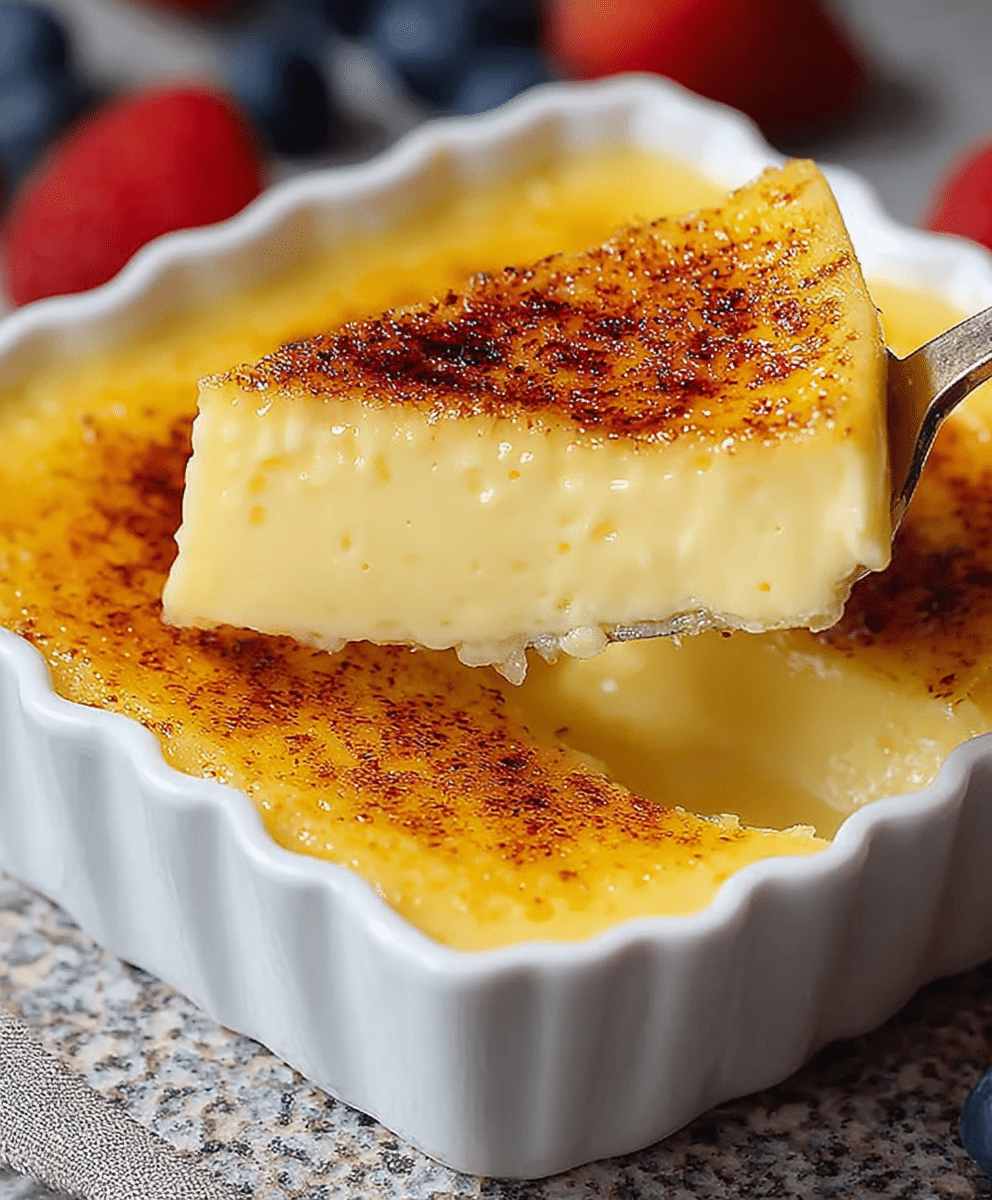
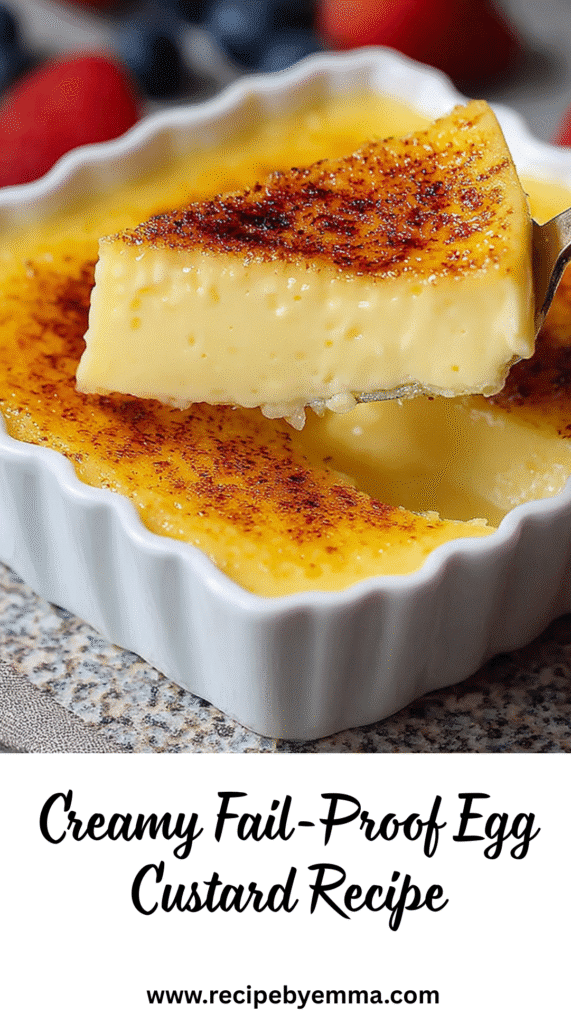
There’s something undeniably comforting about a smooth, creamy custard. It’s simple, yet luxurious—a dessert that feels fancy, yet is completely achievable in any home kitchen. With just a handful of basic ingredients like eggs, milk, sugar, and vanilla, this Easy and Creamy Fail-Proof Egg Custard recipe is designed to delight every palate. Whether you’re a seasoned baker or a beginner in the kitchen, you’ll love how forgiving and satisfying this dessert is.
Honestly, few desserts can compete with the nostalgic charm of custard. Its velvety texture, gentle sweetness, and delicate aroma evoke memories of cozy kitchens and homemade treats. And the best part? It’s incredibly easy to make, even if you’ve never attempted a custard before.
In this post, we’ll break down every step, share tips for perfecting your custard, explore ingredient substitutions, and offer creative variations so you can truly make this recipe your own. By the end, you’ll not only know how to make flawless egg custard, but also understand the science behind it, making you a custard master in your own right.
Why You’ll Love This Recipe
- Fail-proof for beginners: Even if you’ve never baked a custard before, this recipe guides you to success.
- Simple ingredients: No fancy or hard-to-find items required—just eggs, milk, sugar, and vanilla.
- Creamy, smooth texture: Properly tempered eggs and a gentle bake result in the perfect silky custard.
- Customizable flavor: Vanilla is classic, but the custard can easily be infused with other flavors like almond, citrus, or caramel.
- Perfect make-ahead dessert: Bake in advance and chill for a refreshing treat ready when you are.
- Elegant presentation: Served in individual ramekins, it looks as delightful as it tastes.
Ingredients Breakdown
This recipe yields approximately 4 individual servings in small ramekins.
Main Ingredients
- 4 large eggs – Fresh eggs are essential for a rich, smooth texture.
- 2 cups whole milk – Delivers the creamy consistency classic to custard.
- 1/2 cup granulated sugar – Sweetens the custard without overpowering the flavor.
- 1 teaspoon pure vanilla extract – Adds aromatic warmth and depth.
- A pinch of salt – Enhances sweetness and balances flavor.
Optional Garnish
- Ground nutmeg – A light sprinkle on top elevates the custard with warmth and aroma.
Note: Substitutions are possible for dietary needs:
- Milk: almond, soy, or coconut milk can replace whole milk, but the custard will be lighter in richness.
- Sugar: brown sugar or a sugar substitute can be used for a different flavor profile or lower calorie count.
- Vanilla: vanilla essence works, though pure extract is more flavorful.
Equipment You’ll Need
- Medium mixing bowl
- Whisk (or electric hand mixer)
- Saucepan
- Fine sieve or strainer
- Ramekins or custard cups
- Deep baking dish for water bath
- Measuring cups and spoons
Step-by-Step Instructions
1. Preheat the Oven
Start by preheating your oven to 325°F (165°C). A consistent oven temperature is crucial for a smooth, even bake.
2. Whisk the Eggs
In a medium mixing bowl, gently whisk 4 large eggs until just combined. Avoid vigorous whisking, as incorporating too much air can create bubbles in the final custard.
3. Heat the Milk
Pour 2 cups whole milk into a saucepan and warm over medium heat. Watch carefully: the milk should be hot with tiny bubbles forming around the edges, but not boiling.
4. Temper the Eggs
Tempering prevents scrambled eggs in your custard. Gradually pour the warm milk into the whisked eggs while continuously stirring. This gently raises the temperature of the eggs. Once combined, the mixture can be returned to the saucepan for the next steps.
5. Add Sugar, Vanilla, and Salt
Stir in 1/2 cup granulated sugar, 1 teaspoon vanilla extract, and a pinch of salt. Mix until the sugar is fully dissolved and the mixture is smooth.
6. Strain for Smoothness
For a silky texture, strain the mixture through a fine sieve into a large measuring cup or bowl. This step removes any small lumps or cooked egg bits.
7. Prepare the Ramekins
Pour the custard evenly into ramekins or custard cups, filling about 3/4 full. This ensures even cooking without overflow.
8. Create a Water Bath
Place the ramekins in a deep baking dish. Carefully add hot water to the dish until it reaches halfway up the sides of the ramekins. This gentle cooking method ensures even heat distribution and prevents curdling.
9. Bake the Custard
Place the baking dish in the preheated oven and bake for 35-40 minutes, or until the custard is set but slightly jiggly in the center. Remember, it will continue to firm as it cools.
10. Cool to Room Temperature
Remove the ramekins from the water bath and let them cool on a rack. This prevents condensation from forming, which could make the custard watery.
11. Chill Before Serving
Refrigerate the cooled custard for at least 2 hours. Chilling allows the custard to fully set and enhances the flavor.
12. Serve and Garnish
Just before serving, sprinkle a pinch of ground nutmeg or another favorite garnish on top. Enjoy the creamy, comforting custard as is, or pair it with fresh fruit, cookies, or caramel drizzle.
Tips for Perfect Custard
- Use fresh eggs: They provide structure, flavor, and smooth texture.
- Gentle whisking: Incorporating too much air can cause bubbles and a less creamy texture.
- Don’t skip tempering: Adding warm milk slowly prevents scrambled eggs.
- Strain custard: Straining ensures a smooth, velvety finish.
- Water bath: Keeps heat gentle and even, preventing curdling.
Variations to Try
- Flavored Custard: Add a teaspoon of almond extract, lemon zest, or orange zest for a unique twist.
- Chocolate Custard: Melt 1/4 cup of dark chocolate into the milk before tempering the eggs.
- Caramel Custard: Drizzle caramel sauce at the bottom of the ramekins before adding custard for a flan-like effect.
- Spiced Custard: Mix in cinnamon, cardamom, or pumpkin spice for seasonal variations.
Common Questions (FAQ)
1. Can I use low-fat milk instead of whole milk?
Yes, but the custard may be less creamy. Whole milk is preferred for the richest texture.
2. What if my custard overcooks?
Overcooked custard can become grainy. If this happens, serve with whipped cream or a sauce to soften the texture.
3. Can I flavor the custard beyond vanilla?
Absolutely! Infuse milk with flavors like almond, caramel, or citrus zest. Just use sparingly to avoid overwhelming the custard.
4. How do I store leftover custard?
Store in an airtight container in the fridge for up to 3 days. Serve chilled or allow to reach room temperature before enjoying.
Why This Custard Stands Out
- Simple Ingredients: No heavy cream, eggs, sugar, or vanilla—just the basics.
- Forgiving Recipe: Even beginner bakers can achieve a smooth, creamy custard.
- Versatile: Serve as a dessert on its own, layer in trifles, or pair with fruit, cookies, or caramel.
- Elegant Presentation: Ramekins or custard cups elevate the visual appeal.
Pro Tips
- Room Temperature Ingredients: Bring eggs and milk to room temperature to prevent temperature shock and curdling.
- Watch Oven Temperature: Even a small change can affect texture. 325°F is ideal.
- Water Bath Care: Use boiling water for the bath to maintain consistent cooking temperature.
Serving Suggestions
- Serve as-is with a dusting of nutmeg.
- Pair with shortbread cookies, fresh berries, or fruit compote.
- Drizzle caramel or chocolate sauce on top for extra indulgence.
- For a breakfast twist, serve custard warm with a sprinkle of cinnamon and maple syrup.
Ingredient Spotlight
Eggs: Provide structure and richness; essential for creamy custard texture.
Whole Milk: Adds natural creaminess and enhances custard flavor.
Vanilla Extract: Balances sweetness and adds aromatic depth.
Make-Ahead and Storage
- Custard can be made a day ahead.
- Chill for at least 2 hours, ideally overnight.
- Store in airtight containers in the refrigerator for up to 3 days.
Nutritional Overview (Per Serving)
| Nutrient | Amount |
|---|---|
| Calories | 210 kcal |
| Fat | 10 g |
| Saturated Fat | 6 g |
| Carbohydrates | 20 g |
| Sugars | 18 g |
| Protein | 7 g |
| Fiber | 0 g |
Dietary Notes: Vegetarian-friendly, gluten-free, contains dairy and eggs.
Expanded Conclusion
This Easy and Creamy Fail-Proof Egg Custard Recipe is a versatile, comforting dessert that anyone can make. Its creamy texture, smooth finish, and classic flavor make it a go-to recipe for weeknight desserts, special occasions, or a simple indulgence. With tips on tempering, chilling, and flavor variations, you’ll be equipped to make flawless custard every time.
Whether enjoyed on its own or paired with fresh fruit, cookies, or a caramel drizzle, this custard is sure to become a favorite. Its ease, elegance, and deliciousness make it a recipe worth keeping in your dessert repertoire.
Serve chilled, sprinkle with nutmeg, and savor the creamy goodness—a dessert that feels like a warm hug in every spoonful.
Print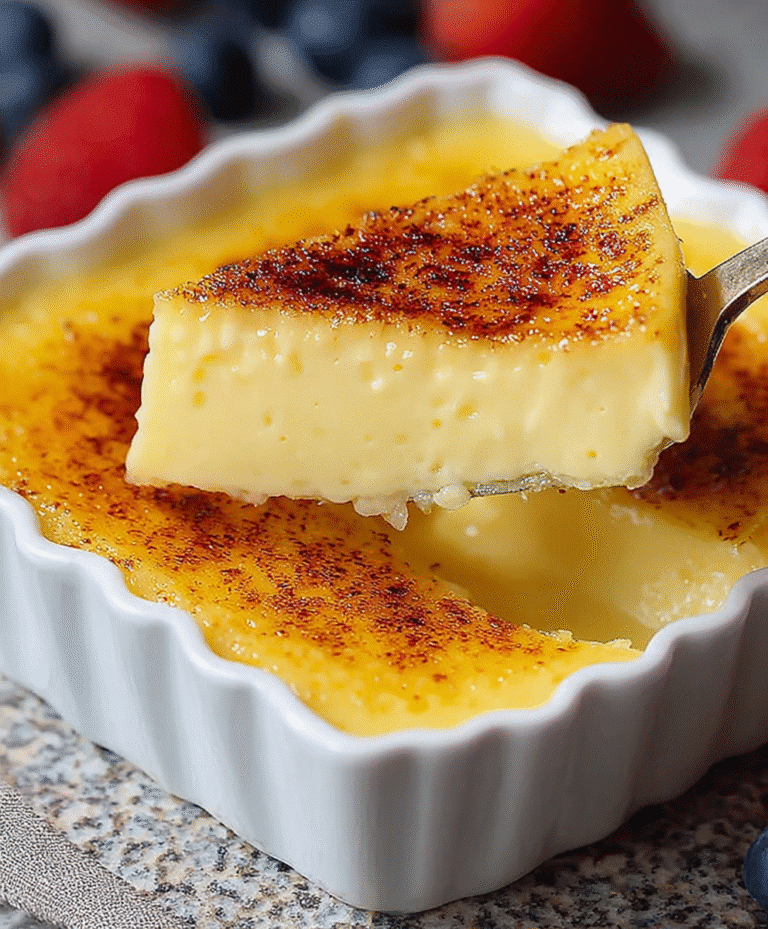
Easy and Creamy Fail-Proof Egg Custard Recipe
This egg custard is creamy, smooth, and super easy to make. With just a few simple ingredients like eggs, milk, and sugar, you’ll enjoy a tasty dessert in no time! Honestly, who doesn’t love a delicious, homemade treat? I always serve mine with a sprinkle of nutmeg on top it’s like a warm hug in a bowl! This recipe is forgiving and perfect for anyone, even beginners.
- Total Time: 2 hours 55 minutes
- Yield: 6 servings
Ingredients
- 4 large eggs
- 2 cups whole milk
- 1/2 cup granulated sugar
- 1 teaspoon pure vanilla extract
- A pinch of salt
- Ground nutmeg, for garnish (optional)
Instructions
- Preheat the oven to 325°F (165°C).
- In a medium bowl, gently whisk the eggs until just combined.
- Pour the milk into a saucepan and warm over medium heat until small bubbles form around the edges.
- Gradually pour the warm milk into the eggs while whisking continuously to temper them.
- Add sugar, vanilla extract, and a pinch of salt. Stir until sugar is dissolved.
- Strain the mixture through a fine sieve for smoothness.
- Pour custard into ramekins, filling about 3/4 full.
- Place ramekins in a deep baking dish. Add hot water to reach halfway up the sides of the ramekins.
- Bake 35-40 minutes until custard is set but slightly jiggly in the center.
- Cool to room temperature, then chill in refrigerator for at least 2 hours.
- Before serving, sprinkle with nutmeg or preferred garnish and enjoy.
Notes
- Tempering eggs prevents scrambling and ensures a silky custard.
- Use whole milk for the creamiest texture; low-fat milk works but is less rich.
- You can infuse milk with almond, caramel, or citrus zest for flavor variations.
- Store leftovers in an airtight container in the refrigerator for up to 3 days.
- Prep Time: 15 minutes
- Cook Time: 35-40 minutes
- Category: Dessert
- Method: Baking
- Cuisine: American
- Diet: Vegetarian